Introduction
Penis size ranks among the top questions in men’s sexual health, but it’s also riddled with myths. Most of the confusion stems from photo-shopped images in the media, different ways to measure, and shady data online. Unfortunately, a lot of guys just compare themselves to the wildest stories rather than medically documented facts.
This article’s purpose is to give a straightforward, evidence-based knowledge of penis size including worldwide averages, percentile ranks, and measurement methods. The main objective is to share factual numbers and helpful tips to understand the norm and what really matters in everyday scenarios, rather than indulging in the myths or promotional stories.
What Is the Average Penis Size?
On average, an erect penis measures around 5.1 to 5.5 inches (1314 cm) in length. This figure is derived from extensive clinical research that included thousands of individuals. The fact that the dimensions were determined by experts rather than self-reporting makes these findings significantly more trustworthy.
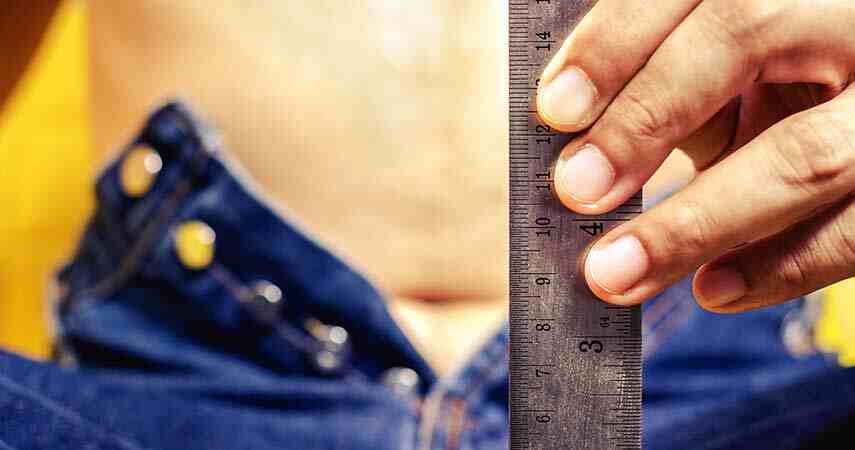
Penis Size Measure
Understanding Flaccid vs Erect Measurements
Penis size can differ greatly depending on whether the penis is measured in a non-erect or an erect state. Non-erect size is impacted by factors such as cold, stress, and physical exertion, which is why it is not seen as a true reflection of size.
On average, a flaccid penis is 3.5 to 4 inches (8.910.2 cm) long, whereas an erect penis is 5.1 to 5.5 inches (1314 cm) long. Girth or thickness usually comes to about 4.5 to 4.8 inches (11.512.2 cm) when erect. These measurements show that the majority of men fall within a fairly narrow and normal range.
Penis Size Chart (Percentile Breakdown)
Understanding percentiles gives better context than simply knowing averages. Instead of asking “am I average?”, percentiles help answer “where do I stand compared to others?”
| Percentile | Erect Length | Meaning |
|---|---|---|
| 10th | ~4.3 inches | Smaller than most |
| 25th | ~4.7 inches | Slightly below average |
| 50th | ~5.2 inches | Average |
| 75th | ~5.7 inches | Above average |
| 90th | ~6.3 inches | Larger than most |
Most men fall between 4.5 and 6 inches, which means extreme sizes—either very small or very large—are relatively uncommon. This perspective often helps reduce unnecessary anxiety caused by unrealistic comparisons.
How to Measure Penis Size Correctly
Since inappropriate methods cause wrong results, using the right method is very important for proper measurement. The fact is most men who either overestimate or underestimate their size do this unknowingly due to an improper technique.
When measuring length, one should be fully erect first. A stiff ruler rather than a soft measuring tape is the instrument to use. It has to be placed at the base of the penis and a gentle pressure should be applied to press the ruler up against the pubic bone taking fat into consideration. Then, measure from the base to the tip, in the case of the presence of foreskin exclude it.
To measure the thickness, get a soft measuring tape and wrap it around the thickest part of the penis. Besides, it is essential to not squeeze the skin as it will cause a reduction in accuracy. Again, multiple measurements and the average of those can give a much accurate result.

Penis Size Chart Info
Does Penis Size Really Matter?
One of the frequently asked questions is whether size really matters when it comes to sexual satisfaction. Although it can be a factor, studies have shown that it is not the main element by far.
Most people’s level of satisfaction depends on the emotional bond communication getting turned on and the right technique to a much greater extent than just the person’s physical features. Psychological safety and self-esteem tend to matter more than, for example, the size of the organ. Actually, stressing too much about size may lead to performance anxiety which is likely to have a worse effect than the actual size.
Therefore, size does not matter very much and is usually a minor consideration when compared to the overall feeling of being together and intimacy.
Factors That Affect Perceived Size
Perception of size can differ tremendously, depending on a few physical and visual factors. The most time body fat is one of them. Extra fat in the pubic area concealing the base of the penis does happen sometimes and makes it seem shorter than it is.
One more thing is that the erection angle has a contribution too. A penis that points away can be visually longer, while the one that looks up may be perceived as shorter though the measurements are almost the same. Exposure to light, the way the body is held and viewpoint can still change how a size is perceived.
Besides that, environmental factors, like temperature, can also have a temporary effect on the size of the penis in its flaccid state. A cold climate or anxiety can lead to a shrinking in size, which is a very normal and completely reversible situation.
Common Myths About Penis Size
Most of the penis size common myths circulating are mostly based on people’s perception and not on scientific facts. One of the most common assumptions is that the bigger the better. But actually comfort and a good match are usually the deciding factors for sexual satisfaction.
Another popular myth is that penis size can be estimated by one’s physical features such as height, hand size, or shoe size. However, research has consistently proven that these factors do not have any significant relation to each other.
Moreover, there are a lot of products on the market which are marketed as capable of increasing size significantly. Some of those may cause a very short-term effect but the chances of obtaining a major permanent change even after using non-medical methods are very slim according to the available evidence.
Are Enlargement Methods Effective?
Penis enlargement is heavily marketed, but the effectiveness of the methods is highly variable. Some drug approaches approved by the medical community, for example using traction devices, can bring small enhancements after a while of continuous application. On the other hand, changes are usually minor.
Though there are surgeries possible, it is highly unlikely that you are a candidate for you unless you have some kind of medical condition that necessitates it. Most of the products you will find in the stores, especially the ones that promise quick growth, hardly have any backing from the scientific community.
If you decide to resort to these methods, it’s key to have a realistic view and put safety first instead of chasing fast results.
Psychological Impact of Size Perception
Many times perception of size is greatly influenced by psychological factors. For instance, men who see in the media only very big men may think they are smaller than the average man, even if they are not. They can also become very unhappy and maybe upset.
Knowing the real statistics and understanding that there is a big range of normal sizes can make someone less worried about it and more able to see things in a realistic way. Things like confidence, being able to talk to people, and good mental health generally play an even bigger role in one’s real-life experiences than just physical size by itself.
Conclusion
Everyone seems to be concerned about the size of a man’s penis and many have fallen for the myths around it but surprisingly enough, hard data reveal that most men are quite normal, and even the range of differences is rather small. The average erect size is about 5.1 to 5.5 inches, and cases of very small or very large are very rare.
Proper measurement, setting one’s standards neither too high nor too low, and knowing that size is probably the last factor when it comes to overall satisfaction, are three things that will help one to focus on the more important parts of sexual health and confidence.







 This article changed my life!
 This article was informative.
 I have a medical question.
 This article contains incorrect information.
 This article doesn’t have the information I’m looking for.