Table Of Contents
- Introduction
- Key Highlights
- What Are Pelvic Floor Muscles?
- Why Pelvic Floor Strengthening Matters
- Signs of a Weak Pelvic Floor
- Best Pelvic Floor Strengthening Exercises
- How Often Should You Train?
- Common Mistakes to Avoid
- When to Expect Results
- When to Seek Medical Advice
- Conclusion
- Frequently Asked Questions
Introduction
Pelvic floor strengthening is an essential yet often overlooked part of overall health. The pelvic floor muscles support key functions related to bladder control, bowel movements, and sexual performance. When these muscles are weak, it can lead to issues such as urinary leakage, reduced control, and decreased performance.
The good news is that pelvic floor muscles can be trained and strengthened just like any other muscle group. With the right exercises and consistency, it is possible to improve control, endurance, and overall function.
This guide explains how pelvic floor strengthening works, why it matters, and the most effective exercises to incorporate into your routine.
Key Highlights
- Pelvic floor muscles support bladder, bowel, and sexual function
- Weak muscles can lead to leakage and reduced control
- Regular exercises can significantly improve strength and endurance
- Consistency is key for noticeable results
- Exercises can be done easily at home without equipment
What Are Pelvic Floor Muscles?
The pelvic floor muscles are a group of muscles located at the base of the pelvis. They act like a supportive hammock, holding organs such as the bladder and bowel in place. These muscles also play a role in controlling urination and supporting sexual function.
When these muscles are strong, they provide better control and stability. When weakened, they can lead to various functional issues that affect daily life.
Why Pelvic Floor Strengthening Matters
Improves Bladder Control
Strong pelvic floor muscles help control the release of urine, reducing the risk of leakage and urgency.
Supports Prostate Health
Pelvic floor exercises can support better urinary function, especially in individuals experiencing prostate-related symptoms.
Enhances Sexual Performance
Stronger pelvic muscles contribute to better control and improved performance.
Prevents Muscle Weakness Over Time
Like other muscles, the pelvic floor can weaken with age or inactivity. Regular training helps maintain strength.
Signs of a Weak Pelvic Floor
- Frequent urge to urinate
- Difficulty controlling urination
- Leakage during physical activity
- Reduced control during movement
- Lower core stability
If these symptoms are present, strengthening exercises can help restore function.
Best Pelvic Floor Strengthening Exercises
Kegel Exercises
Kegels are the most effective and widely recommended pelvic floor exercise. They involve contracting and relaxing the pelvic muscles.
To perform:
- Identify the correct muscles by stopping urine flow briefly (only for identification).
- Contract these muscles and hold for a few seconds.
- Relax slowly and repeat.
Consistency is more important than intensity when performing Kegels.
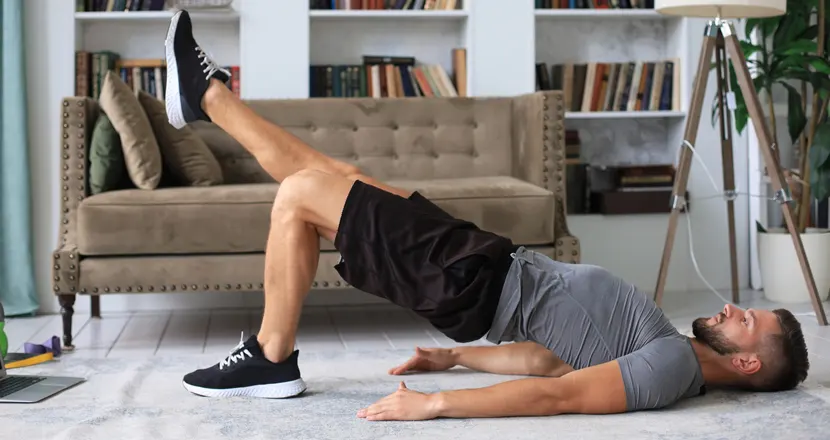
Bridge Exercise
The bridge exercise strengthens the pelvic floor along with the core and glutes.
- Lie on your back with knees bent and feet flat on the ground.
- Lift your hips upward while engaging your pelvic muscles.
- Hold briefly, then lower slowly.
This exercise improves overall pelvic stability.
Squats
Squats activate multiple muscle groups, including the pelvic floor.
- Stand with feet shoulder-width apart.
- Lower your body into a squat position.
- Engage your core and pelvic muscles as you rise.
Regular squats can help improve strength and endurance.
Deep Breathing with Activation
Controlled breathing helps engage the pelvic floor muscles effectively.
- Inhale deeply while relaxing the body.
- Exhale slowly while gently contracting pelvic muscles.
This improves coordination and muscle awareness.
How Often Should You Train?
Pelvic floor exercises should be performed regularly for best results. Short, consistent sessions are more effective than occasional intense workouts.
A daily routine with multiple repetitions can help build strength gradually. Over time, the muscles become more responsive and easier to control.
Common Mistakes to Avoid
- Using the wrong muscles (engaging abdomen, thighs, or glutes instead of the pelvic floor)
- Holding the breath during exercises
- Overtraining or applying excessive force
Focusing on proper technique and consistency leads to better results.
When to Expect Results
Pelvic floor strengthening is a gradual process. Initial improvements in control and awareness may appear within a few weeks. With continued practice, strength and endurance improve over time.
Long-term consistency leads to noticeable benefits in daily activities and overall function.
When to Seek Medical Advice
If symptoms such as persistent leakage, discomfort, or lack of improvement continue, it may be helpful to consult a healthcare professional.
A specialist can assess muscle function and recommend targeted therapies if needed.
Conclusion
Pelvic floor strengthening is a simple yet powerful way to improve control, stability, and overall function. With consistent practice and proper technique, these exercises can deliver lasting benefits and support long-term health.



 This article changed my life!
 This article was informative.
 I have a medical question.
 This article contains incorrect information.
 This article doesn’t have the information I’m looking for.